
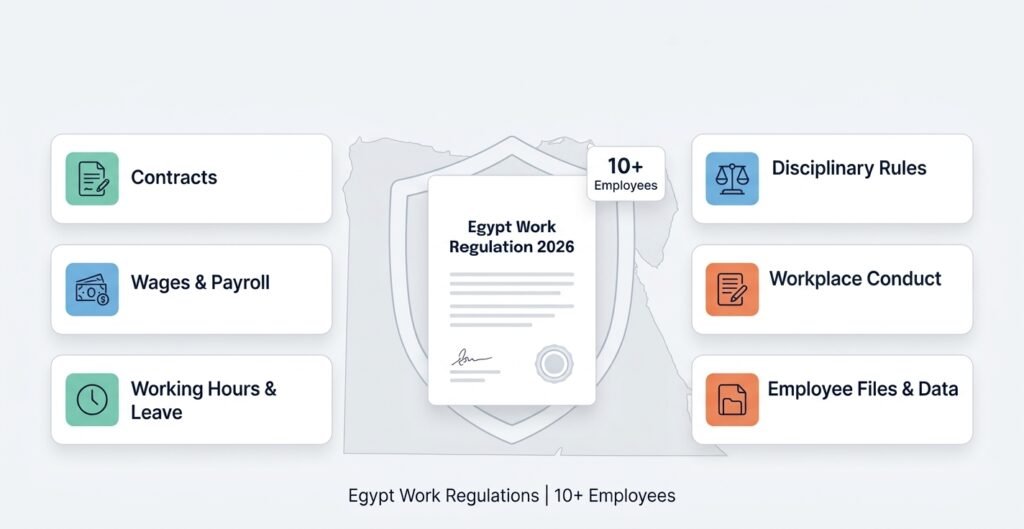
Egypt Work Regulations 2026: What Companies with 10+ Employees Need to Know
When your workforce in Egypt reaches 10 employees, your internal work regulation ceases to be an optional administrative document. It becomes a core operational and legal foundation that governs daily workflows, resolves disputes before they escalate, and sets clear expectations across the organization.
Under Article 137 of Egypt Labor Law No. 14 of 2025, employers with 10 or more workers are legally mandated to establish tailored internal work regulations reflecting the specific nature of their operations. The Ministry of Labour reinforced this framework by releasing updated private-sector guidelines focusing on practical, operationally aligned company policies rather than superficial templates.
Who Must Comply?
Any business operating in Egypt with 10 or more employees falls directly under this legal requirement. If your headcount is approaching this threshold, reviewing your internal policies early prevents operational friction and administrative delays when compliance becomes mandatory.
The 10 Core Pillars of the 2026 Guidelines
The Ministry of Labour highlights ten primary focus areas that every compliant internal work regulation must address cleanly and practically:
- Wages & Compensation: Clear rules governing base pay, structure, and pay schedules.
- Working Hours & Leave: Frameworks for standard working hours, rest breaks, annual/sick leave, and overtime compensation.
- Contracts & Data Protection: Employment contract alignment, employee record maintenance, and workplace data privacy.
- Performance & Progression: Structured criteria for employee evaluations, internal transfers, and promotions.
- Training & Skill Development: Commitments to workforce upskilling and professional growth.
- Workplace Conduct & Fair Treatment: Guidelines for professional behavior, formal grievance channels, and non-discrimination policies.
- Investigations & Disciplinary Actions: Transparent disciplinary codes, investigation procedures, and penalties.
- Offboarding & Rights Settlement: Formal termination procedures, handover protocols, and final payment settlements.
- Flexible & Remote Work: Operational guidelines for hybrid, flexible, or work-from-home models where applied.
- Protection of Acquired Rights: Safeguarding existing benefits or custom employee perks that exceed legal minimums.
The Approval Process & Legal Timeline
Article 137 defines a clear administrative roadmap for finalizing your company’s work regulation:
- Preparation Window: Regulations must be drafted within 60 days of starting operations, reaching 10 workers, or law enactment.
- Stakeholder Consultation: The relevant trade union organization is given 15 days to submit feedback.
- Administrative Approval: If the competent authority does not formally approve or object within 30 days of receipt, the regulation becomes legally effective.
Why Copying Generic Templates Fails
The most common compliance mistake is adopting a generic regulation template. If your documented regulations say one thing—such as rigid office hours—while your business operates on flexible schedules, commission structures, or remote workflows, the document fails its primary purpose. Unaligned regulations create legal exposure during labor inspections and internal friction during employee disputes.
How TrioTalents Streamlines Your Compliance
At TrioTalents, we design internal regulations around your actual business model. We bridge the gap between legal requirements and day-to-day operations through a practical, phased approach:
- Current-State HR Audit: Reviewing existing contracts, leave policies, attendance systems, and compensation structures.
- Tailored Regulation Drafting: Building custom work regulations that accurately reflect how your business functions while meeting official standards.
- Contract & Policy Alignment: Ensuring full consistency between employment contracts, internal handbooks, and the new regulation.
- Administrative Support: Preparing submission documentation and managing administrative follow-ups.
- Ongoing Scale Support: Updating regulations as your headcount grows or operational model evolves.
Ready for 2026 compliance?
If your team in Egypt has reached or is approaching 10 employees, start with a practical review.
Official References
- Reference 1: Egypt Ministry of Labour – General Rules for Private-Sector Work Regulations (29 Aug 2026)
- Reference 2: Egypt Labor Law No. 14 of 2025 – Article 137 (Official Gazette / Al-Amiria)
- Reference 3: Egypt Ministry of Labour Laws and Legislation
Editorial note: This article is written for general information and marketing education. Final company regulations should be tailored to the company’s activity and reviewed against the applicable law and current administrative requirements.


